On the morning of 1 December 1948, on Somerton Beach at the southern edge of Adelaide, a passer-by noticed a shape slumped against the seawall. Legs extended. Feet crossed at the ankles. A half-smoked cigarette rested on the coat collar, as if the man had paused mid-drag and simply stopped. People who had seen him there the previous evening assumed a drunk had fallen asleep. He had been dead for hours, and nobody on that beach knew his name.
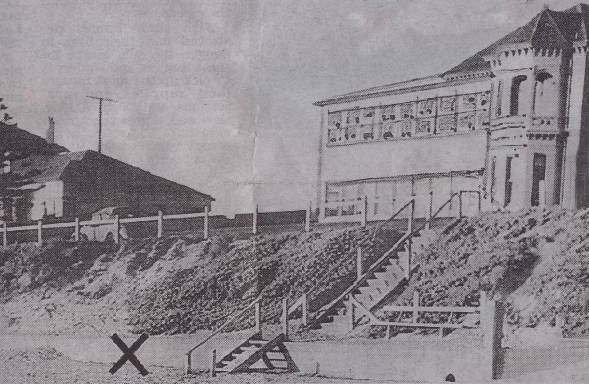
The pockets, emptied on a mortuary table, told a stranger story. An unused second-class rail ticket from Adelaide to Henley Beach. A comb, chewing gum, matches, a packet of Army Club cigarettes with seven Kensitas tucked inside. No wallet, no watch, no keys, no letters. Every maker’s label on his clothing had been carefully cut away, which was odd in a country where wartime rationing made secondhand clothing routine and tags were usually left on. His shoes were polished. A pocket lining had been mended with orange waxed thread that was not commonly sold in Australia. Strip away every label, carry nothing that names you, mend your own pockets: this was a man prepared, patiently and with forethought, to be unidentifiable. The question that has gnawed at Australia for seventy-eight years is whether he did it to himself.
The answer, whatever it is, has been hiding in two objects the police would find in reverse order: a locked suitcase, and a scrap of paper nobody would locate for another six months.
The suitcase checked at noon
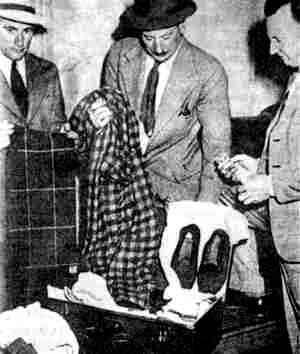 The suitcase surfaced in January 1949, in the cloakroom of the Adelaide Railway Station, checked in at midday on the day before the body was found. Staff remembered nothing about who had deposited it. Inside were clothes stripped of their labels and a reel of the same orange waxed thread that had repaired the dead man’s pocket; the thread was what tied the bag to the man in the first place. Whoever had prepared the wardrobe was thorough, but not perfect. Three items were overlooked: a laundry bag, a tie and an undershirt still carrying variations of the name Keane. Three dry-cleaning marks, 1171/7, 4393/7 and 3053/7, were photographed and checked nationwide, and came back as blank as everything else. No missing person called T. Keane existed. The likelier reading is that those tags survived precisely because the name meant nothing, a decoy to send anyone who came looking off in the wrong direction.
The suitcase showed police what the man was willing to carry. What he carried secretly took five months longer to appear.
The scrap in the fob pocket
In June 1949, coroner Thomas Erskine Cleland was re-examining the body when he noticed a fob pocket sewn into the waistband of the trousers, hidden by design. Inside, rolled tight, was a scrap of printed paper carrying two words in Persian: Tamám Shud. It means it is finished, or ended. They are the closing words of Edward FitzGerald’s translation of the Rubaiyat of Omar Khayyam, a Persian poem about wine and mortality, and somebody had torn them out and folded them where only a very careful search would ever find them.
A scrap needs its book, and police appealed for it. Months went by. Then a man came forward to say he had found a copy of exactly that edition tossed into the back of his unlocked car, parked near Jetty Road in Glenelg, around the time of the death. The torn edge matched perfectly. He had waited months to hand it in, and never offered a convincing explanation for the delay. Inside the book, the back cover had been sealed shut under a pasted-down endpaper, as though someone wanted whatever was written there to stay buried.
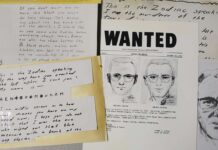
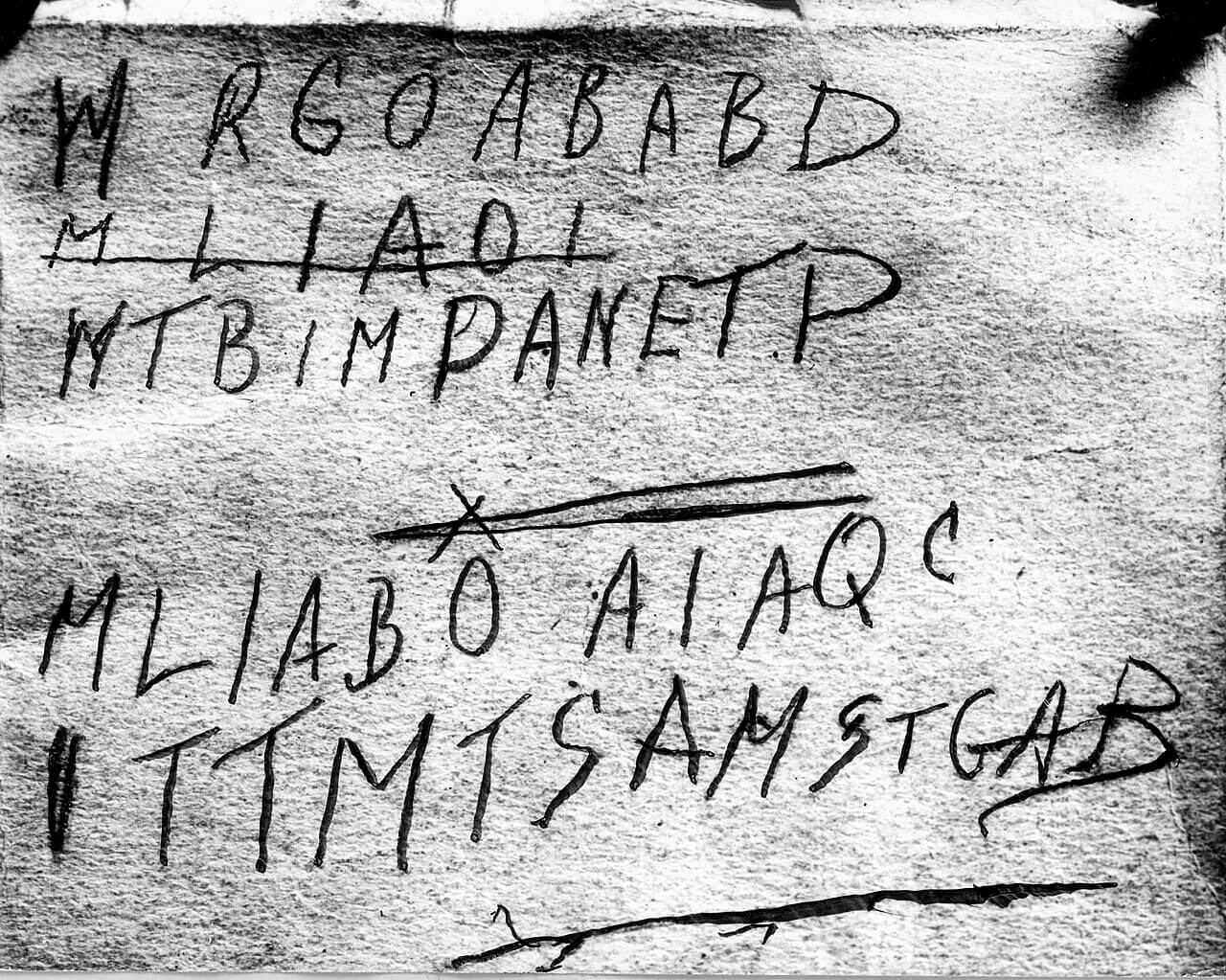
Whatever it was, it nearly succeeded. Peeled open, the endpaper gave up indentations of pencil and pen: a telephone number, a second number nobody could ever trace, and five lines of capital letters, pencilled by hand, the second line struck through. Cryptographers in and out of government service have attacked those five lines ever since, and no interpretation has ever been generally accepted. They may be a one-time-pad cipher of the sort wartime operatives used, or little more than initials copied from poem lines by a man with time to kill. There have been claimed decipherments, including a 2024 academic reading that treats the five lines as a suicide poem in disguise, and none has won wide acceptance. The truth is that nobody knows, and the code is the only part of the case that has refused every professional attempt at it.
The nurse on Moseley Street
One of the two numbers, though, belonged to someone very much alive. A young nurse lived on Moseley Street in Glenelg, roughly 400 metres from where the body lay. She told police she had never seen the man and could not explain why he might have her number. Taken to view the plaster death mask made by investigators, she appeared, in one detective’s later recollection, to be on the verge of fainting. That detective, Paul Lawson, came away convinced she was hiding something. Her name was kept out of the press for the rest of her life.
The book made her harder to dismiss. Years earlier she had given a copy of the same edition of the Rubaiyat to a man she knew during the war, inscribing it with the single word Jestyn, a nickname police could never fully trace. That man was alive and well in Sydney, his book intact, its final page not torn. Whatever connected the nurse, the dead stranger and the poetry, it was not him. Decades later her daughter said she believed her mother had known the Somerton Man. The nurse herself died in 2007 without ever saying so.
But what poison?
All the while the coroner was chasing the only question that outranked the nurse, the code and the name combined: what had actually killed him. Cleland’s inquest still reads like a locked-room story with the door left open. Medical experts testified that death was almost certainly unnatural and that poison, most likely a digitalis compound, best explained symptoms that otherwise had no visible cause at all. Autopsy testing found nothing. Whether the man took something himself or was given it was, and remains, undecidable on the evidence. South Australia’s own archives still file the case under the heading But what poison? — the coroner suspected a poisoning he could never detect, by an unknown hand, perhaps the victim’s own. The verdict recorded no cause of death. It never has.
Then, after 73 years, a name
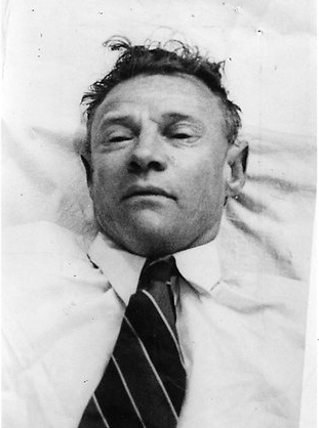 After that verdict, the case mostly slept, waking for anniversaries and the occasional claimed sighting, until modern DNA gave it a reason to be dug up again, literally. The body was exhumed in May 2021, after the Attorney-General of South Australia approved the procedure in 2019 on the chance that twenty-first-century genetics might do what the twentieth century could not. It nearly did. In July 2022 Derek Abbott, a University of Adelaide physicist who had chased the case for decades, and the American forensic genealogist Colleen Fitzpatrick announced an identification built from hairs trapped in the old plaster death mask. Fitzpatrick traced the DNA through a family tree of roughly 4,000 people and matched it against living relatives. On 26 July 2022 they gave the dead man his name back: Carl Charles Webb, an electrical engineer and instrument maker born in Footscray, Melbourne, in 1905.
Webb’s last recorded contact with his family came in 1947. His marriage had come apart, and his estranged wife had moved to South Australia, which Abbott offers as the obvious reason a Victorian instrument maker might board a train to Adelaide without telling a soul. By a coincidence as strange as anything else in the file, Abbott’s own wife is the granddaughter of the nurse from Moseley Street.
Here is the catch, and it matters. South Australia Police have never officially verified the identification, and the coroner has made no finding. Five years after the exhumation, the police report for the coroner still had not been filed; in mid-2026 the force described its investigation as complex and ongoing, while Abbott, whose stated certainty runs to 99.99 per cent, predicted findings by the end of the year. Until a coroner signs, Carl Webb remains a name supported by overwhelming evidence and no legal standing.
What a name cannot answer
Assume the DNA is right, and the mystery shrinks rather than dissolves. A man starting over far from home could carry no wallet and cut his labels, though few would do it that thoroughly. He could die of an undetectable poison, or of an unremarkable heart failure, on a warm summer night. But nothing in Webb’s biography explains the scrap of poetry folded where only a careful search would find it, the nurse’s faint, the pencilled code, or the man who sat on a borrowed book for months before surrendering it. Those things belong to 1948, and 1948 took its answers with it.
The coroner’s findings, whenever they come, are expected to settle who the man was, not how he reached that seawall or why. The words in his fob pocket promised an ending. Seventy-eight years on, it remains the only thing about this case that nobody believes.