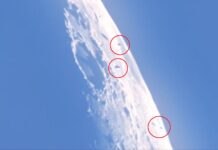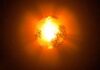
At 3:32 AM on November 17, 2026, a fixed camera in Itaboraí, on the edge of Rio de Janeiro in Brazil, recorded a light that would not go away. It sat motionless above a gap in the clouds, brightened steadily over the next minute, and showed an arc shape with a darker center. Then an incoming cloud deck swallowed it, and when the sky cleared again it was simply gone. The Vega Observatory, whose nightly rig caught the whole thing, checked it against every mundane explanation it could think of and came up empty.
The glow itself may yet turn out to be something dull. The method behind the capture deserves attention either way.
A Timeline Told In Timestamps
The instrument was Vênus 2, one of the Vega Observatory’s calibrated sky cameras, pointed at the western and northwestern horizon. Its log of the event reads like a detective story told in timestamps. At 03:32 local time the source appears in the same pixel coordinates with no drift, no meteor streak, and none of the blinking strobes that mark ordinary air traffic. Over the following minute it grows brighter and develops an arc-shaped outline with a dark core. At 03:33 a low cloud front slides over that patch of sky and the light dims progressively until it disappears, which is a strong clue that the source sat above the cloud deck rather than under it. At 03:51, with the sky clear again, the stars in the frame are pinpoint-sharp and the spot where the light had been shows nothing at all.
Every Suspect Eliminated, No Winner Declared
The Vega team then did the tedious part: cross-referencing the time and position of the source against astronomical, meteorological, and aeronautical data. Their conclusion, posted alongside the footage, is that the object was not a meteor, not an aircraft, not a drone, not an artificial satellite, not a known celestial body, and not an artifact of lens or sensor. What remains is the label researchers reach for when elimination runs out, an unidentified anomalous phenomenon, or UAP.
A Camera That Never Sleeps
The reason this footage exists at all is patience of a deliberately unglamorous kind. Vega is an amateur operation. Its cameras are affordable fixed units that watch the same slice of sky every night and store whatever passes through. Nothing aims them in response to a tip, and nothing switches them on for a special occasion. Because the setup never blinks, it catches the events that everyone who sleeps through the small hours would miss. In online discussions of the sighting, other skywatchers describe similar rigs built from half a dozen off-the-shelf security cameras aimed at the heavens, frame by frame at the end of each week. One commenter summed up the hobby in a single word: fishing.
The observatory signed off its report with a line that could serve as the motto for this quiet corner of science: “The sky is always telling a story. Our job is to be watching when it happens.”